
This investigation evaluate the addition of 5% pulp of mango (Mangifera indica), baobab (Adansonia digitata), and guava (Psidium guajava) fruit on some properties (physicochemical and sensory) of frozen yoghurt (FY) using camel milk (CM) during storage at -18°C for a month. FCMY was prepared and divided into four batches: three fruit-fortified and one plain control, with evaluations conducted every 5 days. Physicochemical data obtained revealed significant variations (P ≤ 0.01) in the values of total solids, ash, and acidity, with baobab-fortified FCMY recording the highest values. Fat content was higher in plain and guava samples, while protein levels were elevated in plain and guava FCMY. Sensory analysis revealed significant differences in flavour (P ≤ 0.01), taste, texture, and the overall acceptability (P ≤ 0.05). Baobab and guava samples shared the highest flavour scores, but baobab-fortified FCMY achieved the top scores for texture, taste and the overall acceptability. The study concluded that baobab pulp significantly enhances total solids, ash, acidity, taste, texture, and consumer preference compared to mango and guava, improving both physicochemical stability and sensory quality. Incorporating mango, baobab, and guava pulp is recommended to increase FCMY flavour and acceptance. Further studies using additional local fruits, vegetables, and spices are suggested to enhance nutritional and functional value.
| Published in | American Journal of Life Sciences (Volume 14, Issue 6) |
| DOI | 10.11648/j.ajls.20261406.14 |
| Page(s) | 173-185 |
| Creative Commons |
This is an Open Access article, distributed under the terms of the Creative Commons Attribution 4.0 International License (http://creativecommons.org/licenses/by/4.0/), which permits unrestricted use, distribution and reproduction in any medium or format, provided the original work is properly cited. |
| Copyright |
Copyright © The Author(s), 2026. Published by Science Publishing Group |
Camel Milk, Frozen Yoghurt, Mango, Baobab, Guava, Physicochemical, Sensory Properties, Storage Periods
Types of fruits | Moisture (%) | Ash (%) | Protein (%) | Fiber (%) | Total sugar (%) | Reducing sugar (%) | Non-reducing sugar (%) |
|---|---|---|---|---|---|---|---|
Mango | 78.3 | 2.07 | 4.18 | 11.29 | 57.23 | 19.05 | 35.29 |
Guava | 79.16 | 3.66 | 4.22 | 24.92 | 23.28 | 19.63 | 3.47 |
Adanosonia digitata | 10.01 | 5.98 | 3.9 | 9.18 | 14.94 | 6.5 | 8.02 |
Types of frozen yoghurt | Total solids (%) | Fat (%) | Protein (%) | Ash (%) | Acidity (%) |
|---|---|---|---|---|---|
Plain | 24.32b | 2.08a | 1.75a | 0.682bc | 0.926b |
Adanosonia digitata | 27.53a | 0.57d | 1.63b | 0.851a | 1.237a |
Mango | 23.00c | 0.91c | 1.44c | 0.729b | 0.912b |
Guava | 23.01c | 1.11b | 1.65b | 0.637c | 0.973b |
Standard erorr | 0.4323 | 0.0398 | 0.0323 | 0.0343 | 0.0485 |
Types of frozen yoghurt | ||||
|---|---|---|---|---|
Storage Period | Plain | Baobab | Mango | Guava |
Day 1 | 23.86defgh | 28.22ab | 22.53ghij | 22.24ghij |
Day 5 | 23.63defgh | 25.90bcd | 21.91hij | 20.57j |
Day 10 | 22.59fghij | 26.97abc | 24.96cde | 23.58defghi |
Day 15 | 27.99ab | 27.79ab | 23.07efghi | 24.22defgh |
Day 20 | 24.35defg | 28.60a | 23.47efghi | 24.91cdef |
Day 25 | 24.40defg | 27.93ab | 22.39ghij | 24.31defg |
Day 30 | 23.41efghi | 27.32ab | 22.70efghij | 21.26ij |
Standard error | 1.1439 | 1.1439 | 1.1439 | 1.1439 |
Types of frozen yoghurt | ||||
|---|---|---|---|---|
Storage Period | Plain | Baobab | Mango | Guava |
Day 1 | 1.90cd | 1.80d | 0.20l | 1.20ef |
Day 5 | 2.05bc | 0.50jk | 1.35e | 1.40e |
Day 10 | 2.05bc | 0.50jk | 1.35e | 1.40e |
Day 15 | 2.00bcd | 0.60ij | 0.90jh | 0.50jk |
Day 20 | 2.00bcd | 0.30kl | 1.10fg | 0.75hi |
Day 25 | 2.45a | 0.20l | 1.05fg | 2.00bcd |
Day 30 | 2.15b | 0.10l | 0.45jk | 0.55ij |
Standard error | 0.1052 | 0.1052 | 0.1052 | 0.1052 |
Types of frozen yoghurt | ||||
|---|---|---|---|---|
Storage Period | Plain | Baobab | Mango | Guava |
Day 1 | 1.80cd | 1.30hi | 1.70de | 1.70de |
Day 5 | 1.90c | 1.20i | 1.40gh | 1.60ef |
Day 10 | 1.80cd | 1.80cd | 1.60ef | 2.20b |
Day 15 | 1.50fg | 1.50fg | 1.30hi | 1.20i |
Day 20 | 1.60ef | 1.30hi | 1.60ef | 1.60ef |
Day 25 | 1.60ef | 2.55a | 0.90j | 1.60ef |
Day 30 | 2.10b | 1.80cd | 1.60ef | 1.70de |
Standard error | 0.0856 | 0.0856 | 0.0856 | 0.0856 |
Types of frozen yoghurt | ||||
|---|---|---|---|---|
Storage Period | Plain | Baobab | Mango | Guava |
Day 1 | 0.428ij | 0.519hij | 0.654fgh | 0.448k |
Day 5 | 0.365j | 0.642fgh | 0.592ghi | 0.512hij |
Day 10 | 0.731fg | 0.946abcd | 0.736efg | 0.755efg |
Day 15 | 0.918abcde | 0.966ab | 0.783bcdef | 0.724fg |
Day 20 | 0.788abcdef | 0.963ab | 0.788abcdef | 0.793abcdef |
Day 25 | 0.773cdefg | 0.951abc | 0.732fg | 0.760efg |
Day 30 | 0.774cdefg | 0.969a | 0.820abcdef | 0.765defg |
Standard error | 0.0908 | 0.0908 | 0.0908 | 0.0908 |
FCMY | Frozen Camel Milk Yoghurt |
ANOVA | Analysis of Variance |
| [1] | El Hatmi H, Jrad Z, Oussaief O, et al. Fermentation of dromedary camel (Camelus dromedarius) milk by Enterococcus faecium, Streptococcus macedonicus as a potential alternative of fermented cow milk. LWT - Food Science and Technology. 2018; 90: 373–380. |
| [2] | Ho TM, Zou Z, Bansal N. Camel milk: A review of its nutritional value, heat stability, and potential food products. Food Research International. 2022; 153: 110870. |
| [3] | Kayode O, Ohanaka NJ, Kolawole, IO, et al. Reproductive health-promoting effects of functional foods. Functional Foods in Health and Disease. 2023; 13(9): 448–458. |
| [4] | Priyashantha H, Madushan R, Pelpolage SW, et al. Incorporation of fruits or fruit pulp into yoghurts: recent developments, challenges, and opportunities. Frontiers in Food Science and Technology. 2025; 5: 1581877. |
| [5] | Ray A, Minz PS, Chitranayak HJ, et al. Optimization of frozen yoghurt based on fat content and freezing temperature for superior sensorial attributes. Indian J. Dairy Science. 2025; 78(3): 208-215. |
| [6] | Kavas N, Kavas G. Probiotic frozen yoghurt production using camel milk (Camelus dromedarius) with improved functions by strawberry guava (Psidium littorale var. cattleianum) fortification. British Journal of Applied Science & Technology. 2016; 14(5): 1-12. |
| [7] | Azari‐Anpar M, Khomeiri M, Daraei Garmakhany A, et al. Development of camel and cow's milk, low‐fat frozen yoghurt incorporated with Qodume Shahri (Lepidium perfoliatum) and cress seeds (Lepidium sativum) gum: Flow behavior, textural, and sensory attributes' assessment. Food Science & Nutrition. 2021; 9(3): 1640-1650. |
| [8] | Muthai KU, Karori MS, Muchugi A, et al. Nutritional variation in baobab (Adansonia digitata L.) fruit pulp and seeds based on Africa geographical regions. Food Science and Nutrition. 2017; 5(6): 1116–1129. |
| [9] | Stadlmayr B, Wanangwe J, Waruhiu CG, et al. Nutritional composition of baobab (Adansonia digitata L.) fruit pulp sampled at different geographical locations in Kenya. Journal of Food Composition and Analysis. 2020; 94: 103617. |
| [10] | Chipurura B, Bhebhenn M, Muchuweti M. Nutritional content, phenolic composition and antioxidant activity of yoghurt enriched with baobab pulp (Adansonia digitata). Nutrafoods - International Journal on Nutraceuticals, Functional Foods and Novel Foods. 2016; |
| [11] |
Ali HJ, El Zubeir IEM. Effect of vanilla, baobab (Adanisonia digitata) and papaya (Carica papaya) fruits on the microbiological and sensory properties of camel milk ice cream. Annals Food Science and Technology. 2020; 21 (2): 326-337. URL:
http://www.afst.valahia.ro/images/documente/2020/issue_2/III.2_Hasan.pdf |
| [12] | Datir S, Regan S. Advances in physiological, transcriptomic, proteomic, metabolomic, and molecular genetic approaches for enhancing mango fruit quality. J. Agric. Food Chemistry. 2023; 71: 20-34. |
| [13] | Tan X, Jiang X, Reymick OO, et al. (E)-2-Octenal inhibits Neofusicoccum parvum growth by disrupting mitochondrial energy metabolism and is a potential preservative for postharvest mango. Food Research International. 2025; 201: 115639. |
| [14] | Achi N, Achi J, Mallam I. Evaluation of yoghurt from fresh cow milk fortified with mango (Mangifera indica L.) pulp in Northern Nigeria. Agricultural Science and Technology. 2024; 16(3): 62-71. |
| [15] | Awolu OO, Aluko BO, Oladeji OA, et al. Physicochemical, nutritional and bioactive qualities of yoghurt produced by enriching whole milk with mango pulp. Acta Universitatis Cibiniensis Series E: Food Technology. 2025; 29 (1): 139. |
| [16] | Chen HB, Lin HT, Jiang XJ, et al. Amelioration of chilling injury and enhancement of quality maintenance in cold-stored guava fruit by melatonin treatment. Food Chemistry. 2022; X. 14: 100297. |
| [17] | Sahu SK, Barman K, Singh AK. Nitric oxide application for postharvest quality retention of guava fruits. Acta Physiologiae Plantarum. 2020; 42(10): 156. |
| [18] | Hassani MI, Kumar H, Kumar S, et al. Studies on the proximate composition of yogurt enriched with pink guava powder. Research & Reviews: Journal of Dairy Science & Technology. 2023; 12(1): 1-12. |
| [19] | Tamime AY, Robinson RK. Background, Standards and Marketing of Frozen Yoghurt: Yoghurt: Science and Technology, 2007. |
| [20] | Kirk RS, Sawyer R. Pearson’s Composition and Analysis of Foods. Edition 9, United Kingdom.1990; |
| [21] | AOAC. Official Methods of Analysis of the Association of Official's Analytical Chemists. 17th Edn., Association of Official Analytical Chemists, Arlington, Virginia, USA. 2003. |
| [22] | Lim J. Hedonic scaling: A review of methods and theory. Food Quality and Preference. 2011; |
| [23] | Arain MA, Salman HM, Ali M, et al. A review on camel milk composition, Techno-Functional properties and processing constraints. Food Science of Animal Resources. 2023; 44(4): 739-757. |
| [24] | Elhassan SMBM; El Zubeir IEM. Factors associated with chemical composition of camel milk from different production systems in Sudan. East African Scholars Journal of Agriculture and Life Sciences. 2024; 7(04): 60-69. |
| [25] | Ibrahem S, El Zubeir IEM. Evaluation of chemical composition of yoghurt made from camel and camel-cheep milk mixtures during storage. International Journal of Dairy Science. 2015; 11(1): 35-40. |
| [26] | Pratap, Y. S. M.; Chandra, R.; Shukla, S. and Ali, M. N. (2016). Optimization of the chemical properties of frozen yoghurt supplemented with different fruit pulp. The Pharma Innovation, 4 (2, Part B): 56-58. |
| [27] | Ali H, El Zubeir IEM. Effects of some fruits on the processing and composition of camel milk ice cream. Croatian Journal of Food Science and Technology. 2023; 15(1): 56-62. |
| [28] | Wairimu N, Elkana OE, Koskei K. Development and evaluation of goat milk yoghurt enriched with baobab fruit pulp. European Journal of Agriculture and Food Sciences. 2022; 4(2): 100-106. |
| [29] | Ismail E, Shenana M, Elalfy M, et al. Novel probiotic adjunct cultures for the production of fruit-flavoured drinkable yoghurt. Egyptian Journal of Food Science. 2020; 48(2): 213-228. |
| [30] | Khaliq A, Mishra AK, Niroula A, et al. An updated comprehensive review of camel milk: Composition, therapeutic properties, and industrial applications. Food Bioscience. 2024; 105531. |
| [31] | Waweru DM, Arimi JM, Marete E, et al. Effect of different formulations and storage on the physicochemical, microbiological, and organoleptic characteristics of Dovyalis caffra fruit yogurt. Foods. 2024; 13(24): 4102. |
| [32] | Azeem M, Ahmed J, Ur Rehman MA. Probiotic set yogurt infused with orange pulp: A multifaceted evaluation of nutritional, antioxidant, and physical attributes. Food Science and Technology International. 2024; |
| [33] | Wang Y, Wuren T, Zhai B, et al. Impact of storage conditions on the quality of raw camel milk. Food Science of Animal Resources. 2024; 44(6): 1345-1357. |
| [34] | Ibraheem S, Idris Y, Mustafa SE, et al. Phytochemical profile and biological activities of Sudanese baobab (Adansonia digitata L.) fruit pulp extract. International Food Research Journal. 2021; 28(1): 31-43. |
| [35] | Pastuszka R, Barłowska J, Litwińczuk Z. Allergenicity of milk of different animal species in relation to human milk. Postępy Higieny I Medycyny Doświadczalnej. 2016; 70: 1451-1459. |
| [36] | Novak J. Caseinolytic proteases of Lactobacillus and Lactococcus strains isolated from fermented dairy products. Mljekarstvo. 2021; 72(1): 11–21. |
| [37] | Alba K, Offiah V, Laws AP, et al. Baobab polysaccharides from fruits and leaves. Food Hydrocolloids. 2020; 106: 105874. |
| [38] | Foltz M, Zahradnik AC, Van Den Abbeele P, et al. A Pectin-rich, baobab fruit pulp powder exerts prebiotic potential on the human gut microbiome in vitro. Microorganisms. 2021; 9(9): 1981. |
| [39] | Bougatef H, Tandia F, Sila A, et al. Polysaccharides from baobab (Adansonia digitata) fruit pulp: Structural features and biological properties. South African Journal of Botany. 2023; 157: 387397. |
| [40] | Hossain MA, Rana MM, Kimura Y, et al. 2014. Changes in biochemical characteristics and activities of ripening associated enzymes in mango fruit during the storage at different temperatures. Bio. Med. Research International. 2023; 232969: |
| [41] | Atwaa ESH, Shahein MR, Raya-Álvarez E, et al. Assessment of the physicochemical and sensory characteristics of fermented camel milk fortified with Cordia myxa and its biological effects against oxidative stress and hyperlipidemia in rats. Frontiers in Nutrition. 2023; 10: |
| [42] | Shahein MR, Atwaa ESH, Elkot WF, et al. The impact of date syrup on the physicochemical, microbiological, and sensory properties, and antioxidant activity of bio-fermented camel milk. Fermentation. 2022; 8(5): 192. |
| [43] | Asogwa IS, Ibrahim AN, Agbaka JI. African baobab: Its role in enhancing nutrition, health, and the environment. Trees Forests and People. 2020; 3: 100043. |
| [44] | Kumari P, Mankar A, Karuna K, et al. Mineral composition, pigments, and postharvest quality of guava cultivars commercially grown in India. Journal of Agriculture and Food Research. 2020; 2, 100061. |
| [45] | Sarkar T, Salauddin M, Sheikh HI, et al. Effect of drying on vitamin, carotene, organic acid, mineral composition, and microstructural properties of mango (Mangifera indica). Journal of Food Processing and Preservation. 2021; 46(2): |
| [46] | Mani-López E, Palou E, López-Malo A. Probiotic viability and storage stability of yogurts and fermented milks prepared with several mixtures of lactic acid bacteria. Journal of Dairy Science. 2014; 97(5): 2578–2590. |
| [47] | Singh TP, Verma AK, Rajkumar V, et al. Study on the oxidative stability and culture viability of goat frozen yoghurt during extended storage. Journal of Food Science and Technology. 2025; 62. |
| [48] | De Caluwé E, De Smedt S, Assogbadjo AE, et al. Ethnic differences in use value and use patterns of baobab (Adansonia digitata L.) in northern Benin. African Journal of Ecology. 2009; 47(3): 433-440. |
| [49] | Zhang J, Zhang Y, Zou S, et al. Characterization of the aroma and flavor profiles of guava fruit (Psidium guajava) during developing by HS-SPME-GC/MS and RNA sequencing. Food Chemistry Molecular Sciences. 2024; 9: 100228. |
| [50] | Sokeng AJT, Sobolev AP, Di Lorenzo A, et al. Metabolite characterization of powdered fruits and leaves from Adansonia digitata L. (baobab): A multi-methodological approach. Food Chemistry. 2018; 272: 93-108. |
| [51] | Moineau-Jean A, Raymond Y, Sabik H, et al. Effect of manufacturing processes and storage on aroma compounds and sensory properties of yoghurt. International Dairy Journal. 2020; 105: 104662. |
| [52] | Pinto SM, Clemente MDG, De Abreu LR. Behaviour of volatile compounds during the shelf life of yoghurt. International Journal of Dairy Technology. 2009; 62(2): 215-223. |
| [53] | Yu Y, Wu L, Li L, et al. Effect of pectic polysaccharides from fresh passion fruit (Passiflora edulis f. flavicarpa L.) peel on physicochemical, texture and sensory properties of low-fat yoghurt. Food Chemistry. 2025; 479: 143801. |
| [54] | Lubbers S, Decourcelle N, Vallet N, et al. Flavor release and rheology behavior of strawberry fat-free stirred yogurt during storage. Journal of Agricultural and Food Chemistry. 2004; 52(10): 3077–3082. |
| [55] | Jakubowska M, Karamucki T. The effect of storage time and temperature on the quality of natural yoghurt. Acta Scientiarum Polonorum Zootechnica. 2020; 18(4): 29-38. |
| [56] | Abdulwaliyu I, Arekemase SO, Batari ML, et al. Nutritional and pharmacological attributes of baobab fruit pulp. Food Production Processing and Nutrition. 2024; 6(1): |
| [57] | Akarca G, Denizkara AJ. Changes of quality in yoghurt produced under magnetic field effect during fermentation and storage processes. International Dairy Journal. 2023; 150: 105841. |
| [58] | Bulut M, Tunçtürk Y, Alwazeer D. Effect of fortification of set‐type yoghurt with different plant extracts on its physicochemical, rheological, textural and sensory properties during storage. International Journal of Dairy Technology. 2021; 74(4): 723–736. |
| [59] | Chipurura B, Pswarayi F, Muchuweti M. Sensory properties and consumer acceptance of a stirred-type yoghurt produced from baobab (Adansonia digitata) pulp during refrigerated storage. African Journal of Food Agriculture Nutrition and Development. 2014; 14(62): 8695-8708. |
| [60] | Dauda A, Abdulkadir O, Ajayi M. Fermentation potentials of baobab (Adansonia digitata) pulp powder in the production of yoghurt from cow milk. Carpathian Journal of Food Science and Technology. 2023; 103-115. |
| [61] | Routray W, Mishra HN. Scientific and technical aspects of yogurt aroma and taste: A review. Comprehensive Reviews in Food Science and Food Safety. 2011; 10(4): 208-220. |
APA Style
Alnogome, A. M. I., Zubeir, I. E. M. E. (2026). Development and Evaluation of Physicochemical and Sensory Properties of Camel Milk Frozen Yoghurt Enriched with Tropical Fruits. American Journal of Life Sciences, 14(6), 173-185. https://doi.org/10.11648/j.ajls.20261406.14
ACS Style
Alnogome, A. M. I.; Zubeir, I. E. M. E. Development and Evaluation of Physicochemical and Sensory Properties of Camel Milk Frozen Yoghurt Enriched with Tropical Fruits. Am. J. Life Sci. 2026, 14(6), 173-185. doi: 10.11648/j.ajls.20261406.14
@article{10.11648/j.ajls.20261406.14,
  author = {Alameen Mohameed Ibrahim Alnogome and Ibtisam Elyas Mohamed El Zubeir},
  title = {Development and Evaluation of Physicochemical and Sensory Properties of Camel Milk Frozen Yoghurt Enriched with Tropical Fruits},
  journal = {American Journal of Life Sciences},
  volume = {14},
  number = {6},
  pages = {173-185},
  doi = {10.11648/j.ajls.20261406.14},
  url = {https://doi.org/10.11648/j.ajls.20261406.14},
  eprint = {https://article.sciencepublishinggroup.com/pdf/10.11648.j.ajls.20261406.14},
  abstract = {This investigation evaluate the addition of 5% pulp of mango (Mangifera indica), baobab (Adansonia digitata), and guava (Psidium guajava) fruit on some properties (physicochemical and sensory) of frozen yoghurt (FY) using camel milk (CM) during storage at -18°C for a month. FCMY was prepared and divided into four batches: three fruit-fortified and one plain control, with evaluations conducted every 5 days. Physicochemical data obtained revealed significant variations (P ≤ 0.01) in the values of total solids, ash, and acidity, with baobab-fortified FCMY recording the highest values. Fat content was higher in plain and guava samples, while protein levels were elevated in plain and guava FCMY. Sensory analysis revealed significant differences in flavour (P ≤ 0.01), taste, texture, and the overall acceptability (P ≤ 0.05). Baobab and guava samples shared the highest flavour scores, but baobab-fortified FCMY achieved the top scores for texture, taste and the overall acceptability. The study concluded that baobab pulp significantly enhances total solids, ash, acidity, taste, texture, and consumer preference compared to mango and guava, improving both physicochemical stability and sensory quality. Incorporating mango, baobab, and guava pulp is recommended to increase FCMY flavour and acceptance. Further studies using additional local fruits, vegetables, and spices are suggested to enhance nutritional and functional value.},
 year = {2026}
}
TY  - JOUR
T1  - Development and Evaluation of Physicochemical and Sensory Properties of Camel Milk Frozen Yoghurt Enriched with Tropical Fruits
AU  - Alameen Mohameed Ibrahim Alnogome
AU  - Ibtisam Elyas Mohamed El Zubeir
Y1  - 2026/11/25
PY  - 2026
N1  - https://doi.org/10.11648/j.ajls.20261406.14
DO  - 10.11648/j.ajls.20261406.14
T2  - American Journal of Life Sciences
JF  - American Journal of Life Sciences
JO  - American Journal of Life Sciences
SP  - 173
EP  - 185
PB  - Science Publishing Group
SN  - 2328-5737
UR  - https://doi.org/10.11648/j.ajls.20261406.14
AB  - This investigation evaluate the addition of 5% pulp of mango (Mangifera indica), baobab (Adansonia digitata), and guava (Psidium guajava) fruit on some properties (physicochemical and sensory) of frozen yoghurt (FY) using camel milk (CM) during storage at -18°C for a month. FCMY was prepared and divided into four batches: three fruit-fortified and one plain control, with evaluations conducted every 5 days. Physicochemical data obtained revealed significant variations (P ≤ 0.01) in the values of total solids, ash, and acidity, with baobab-fortified FCMY recording the highest values. Fat content was higher in plain and guava samples, while protein levels were elevated in plain and guava FCMY. Sensory analysis revealed significant differences in flavour (P ≤ 0.01), taste, texture, and the overall acceptability (P ≤ 0.05). Baobab and guava samples shared the highest flavour scores, but baobab-fortified FCMY achieved the top scores for texture, taste and the overall acceptability. The study concluded that baobab pulp significantly enhances total solids, ash, acidity, taste, texture, and consumer preference compared to mango and guava, improving both physicochemical stability and sensory quality. Incorporating mango, baobab, and guava pulp is recommended to increase FCMY flavour and acceptance. Further studies using additional local fruits, vegetables, and spices are suggested to enhance nutritional and functional value.
VL  - 14
IS  - 6
ER  -
Department of Meat Production, Faculty of Animal Production, University of Khartoum, Khartoum, Sudan
Department of Dairy Production, Faculty of Animal Production, University of Khartoum, Khartoum, Sudan;Institute for Studies & Promotion of Animal Exports, University of Khartoum, Khartoum, Sudan
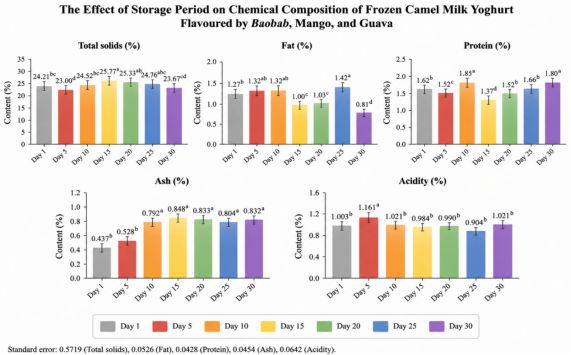
Figure 1. Variation of the chemical composition of FCMY flavoured by baobab, mango, and guava during the storage.
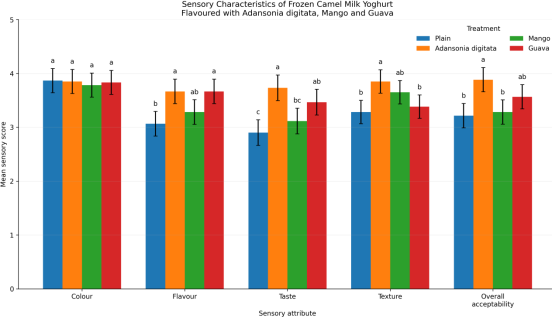
Figure 2. Sensory characteristics of FCMY flavoured with Adansonia digitata, mango and guava.
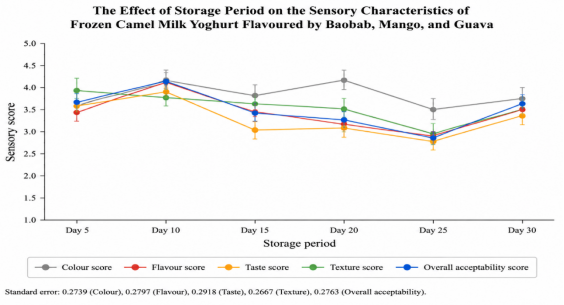
Figure 3. Variation of the sensory characteristics of FCMY flavoured by Adanosonia digitata, mango and guava during the storage.

Information



 Share This Article
 Twitter
 Linked In
 Facebook

 Copy
 Download